How to Earn Money from Music as an Independent Producer
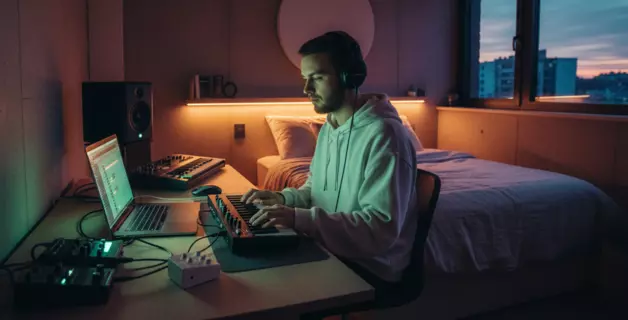
At some point, most people who make music quietly ask themselves how to earn money from music — or whether what they're making evenings and weekends is worth anything beyond a hobby.
It's a fair question, and the honest answer has two parts. The first is that yes, independent musicians are making real money from their work — not Warner Bros. money, not 1998 money, but real income, on a scale that didn't exist for unsigned artists a generation ago. The infrastructure is there now for someone at a computer to reach buyers and listeners without a label, a manager, or a distribution deal. The second part is that almost none of it happens the way the popular articles on the subject suggest.
The "seventy-five ways to make money from music" articles aren't wrong exactly. They're written for nobody in particular. They mix income streams that require a touring band with ones that require a film-scoring network with ones that require a vinyl distribution partner, and present them as if they're comparable options. For an independent musician who produces at a computer, most of that list is noise. The useful question isn't how many income streams exist. It's which ones actually work for the way you already make music.
The traditional music business of the past was built around live performance, physical sales, and publishing royalties collected by teams on artists' behalf — and that model still works for artists who tour or sign to labels, but it's not what's available to an independent producer with a laptop. The version available to you is about building several small revenue streams that compound over time, not waiting for one big event. Producers who go two or three years deep on the right handful of paths reach income levels that outgrow the music side hustle label. The ones who plateau are usually the ones chasing everything at once instead of picking a few and committing.
This article is written for that specific reader: the independent musician who records, produces, and arranges digitally, without a team, and wants to understand which income paths are real. Here's what we cover:
- Five income paths that actually work for independent producers right now.
- Why streaming alone won't pay your rent — and what it's actually good for.
- Beat sales and sample packs as the closest thing to genuine passive income music offers.
- Why stacking two or three paths matters more than picking the "best" one.
- What you actually need to start — less than you think.
Streaming Royalties: The Starting Point, Not the Main Income
Streaming is the first thing most people think of when they think about music streaming revenue, and it belongs on your radar — just not as a primary income source in the early stages. The math is unforgiving at small scale.
When you upload your music through a distributor — DistroKid, TuneCore, CD Baby — your tracks go live on Spotify, Apple Music, Amazon Music, YouTube Music, Tidal, and Deezer simultaneously. Every stream pays a micro-royalty. Spotify pays roughly $0.003–0.005 per stream.
Earning $1,000 a month requires roughly 250,000 monthly streams. A mid-sized independent artist with a dedicated following might see 50,000–100,000 monthly streams after two or three years of consistent releases. That translates to $150–500 a month. Meaningful, but not rent.
What streaming does well is different from what it pays. It makes you searchable. It builds passive listener numbers through algorithmic playlists. It gives you a professional presence that matters when you're pursuing beat sales later. A buyer considering one of your beats will check your Spotify. What they find there either adds or subtracts credibility.
The practical setup: Choose a distributor based on your release frequency. If you release more than four or five tracks a year, a flat annual fee (DistroKid at around $22/year) beats per-release pricing. Register with a Performing Rights Organization — ASCAP or BMI in the US, PRS in the UK — before you release anything. This is how you collect performance royalties separately from streaming royalties.
In year one, streaming is marketing. By year two or three, with a growing catalog, it starts becoming meaningful secondary income.
How to Earn Money from Spotify: What Moves the Needle
Most guides to how to earn money from Spotify focus on play counts as if they're the variable you control. They aren't. The variable you control is a set of signals that determine whether Spotify's algorithm pushes your music or ignores it.
Completion rate matters more than raw play numbers. If listeners skip before 30 seconds, the stream doesn't count and the algorithm registers a negative signal. Short tracks (under three minutes) tend to have higher completion rates, which partly explains why Lo-Fi and ambient genres perform well algorithmically even with modest listener counts.
Spotify for Artists is worth setting up before your first release. It gives you access to pitch upcoming releases to editorial playlist curators — the only direct channel to Spotify's human team. Pitching requires your track to be scheduled but not yet live. You can't pitch retroactively.
Release cadence matters more than release perfection. Monthly singles outperform annual album drops for algorithmic visibility. The data is consistent: regular output beats rare perfection.
Selling Beats Online: The Direct Route to Income
If you're wondering how to make money as a music producer, selling beats online is the shortest line between your DAW and real income. If you produce instrumentals — Hip-Hop, Trap, R&B, Lo-Fi, Drill, Pop, or any genre with a strong beat-driven tradition — this is the path where most independent producers earning meaningful money are concentrated.
BeatStars, the largest dedicated marketplace, has paid out over $250 million to producers since launch. Earnings on these beat selling platforms range from a few hundred dollars a month for casual sellers to five figures monthly for producers with established branding and large catalogs.

The product is simple. An instrumental exported as a tagged MP3 for free listening, and as clean WAV or trackout stems for purchase. Licensing is the mechanism: a buyer pays for the right to use your beat under defined terms.
Beat Licensing: The Structure That Sets Your Pricing
- Non-exclusive lease is the entry tier — typically $20–50 for commercial use within defined limits (2,500–10,000 streams). You keep ownership and sell the same beat to multiple buyers. One beat sold ten times at $30 is $300 for a single production.
- Premium lease sits in the middle — $100–300, higher usage caps, often including stems. Still non-exclusive.
- Exclusive rights means the buyer owns the beat outright. Pricing ranges from $200 for newer producers to $500–2,000 for established names. The pricing mistake almost every new producer makes is pricing too low. A $10 exclusive tells buyers your work has no value. Start non-exclusive leases at $25–30 minimum.
Where to List Your Beats
BeatStars and Airbit are the two dominant marketplaces — BeatStars for its larger buyer base, Airbit for its cleaner free tier and lower commission. Most serious producers list on both and direct buyers to whichever they prefer.
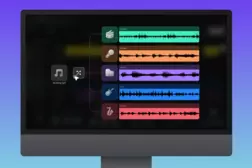
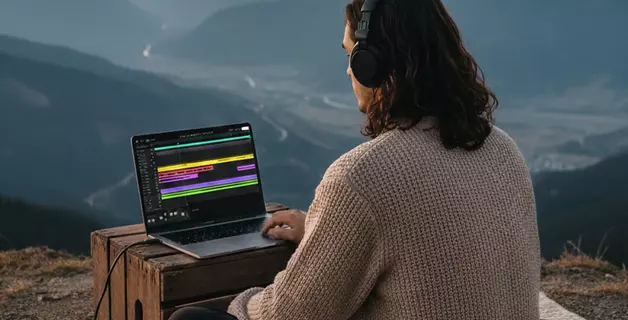
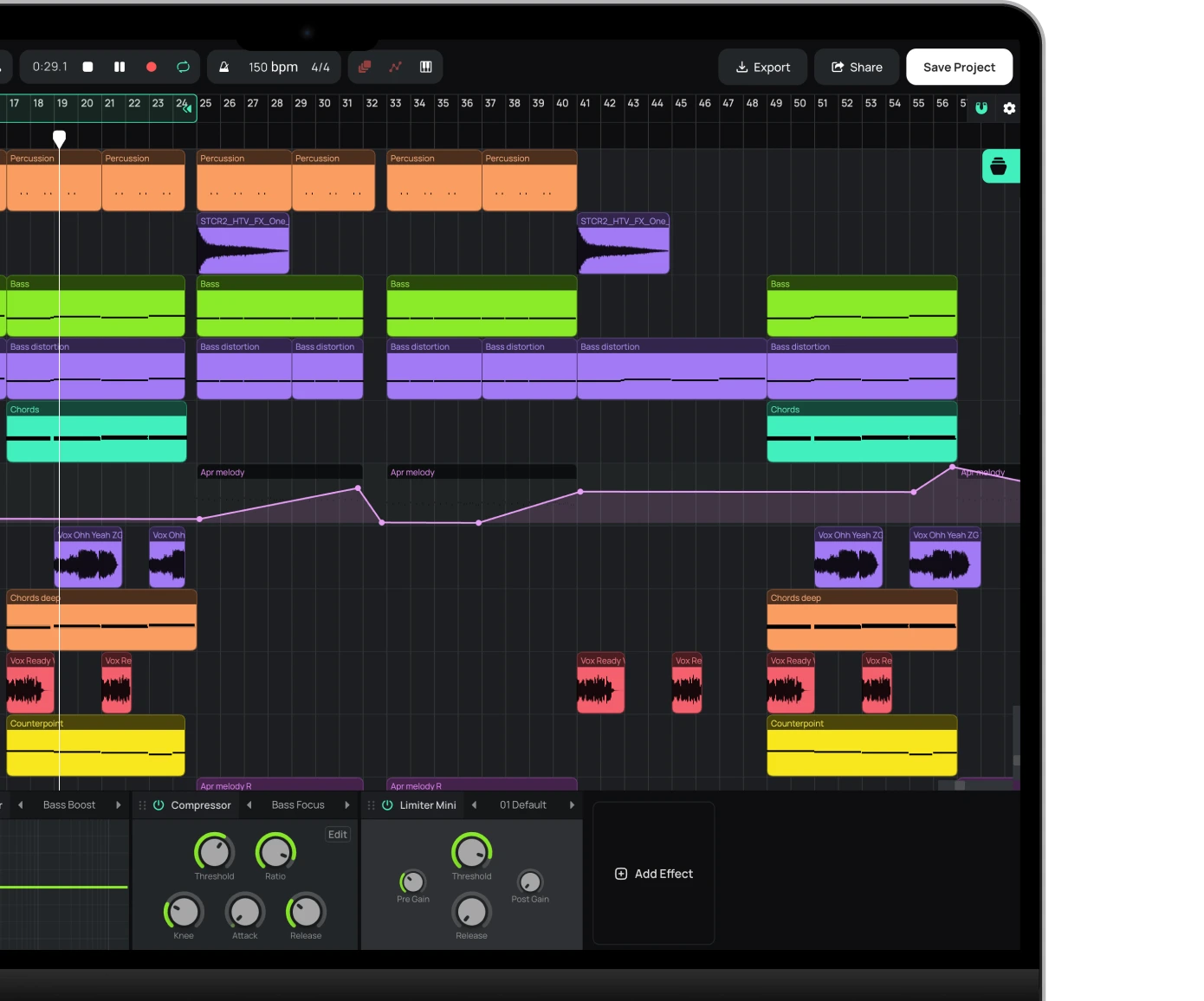
Of course, before you can sell anything, you need to be producing. If you don't have a setup yet, Amped Studio is a full production environment that runs in your browser — no install, no hardware beyond a laptop, and a free tier built for real output, not just a demo.
Sample Packs and Loops: The Passive Income Path
The beat economy has a cousin: producers selling the raw material other producers use. Sample packs, loop packs, drum kits, one-shots, and MIDI packs are a legitimate income stream. This is where the phrase passive income music starts describing something real — a product you build once and sell indefinitely.
The buyer is another producer, which changes how you design the product. A drum kit with 60–100 hits priced at $15–40 can sell steadily for years. A melodic loop pack with 20–30 loops priced at $20–50 serves producers who want a head start on melody. A full sample pack at $30–80 is the most complete offering.
Where to sell: Splice is dominant but curated and hard to enter. BeatStars, Airbit, Gumroad, and Sellfy handle direct sales well.
What sells: Trending genres move faster. Drill, Jersey Club, Hyperpop, Afrobeats, and Phonk have all had significant sample pack moments recently. Quality matters more than quantity — a 40-sample pack of genuinely usable sounds outsells a 200-sample pack of filler.
Each pack is permanent inventory. A pack released in January is still selling a year later. Build ten packs across a year and you have a catalog producing continuous income.
YouTube: Revenue, Audience, and Long-Term Growth
YouTube is the most underestimated income path for music producers. Three formats work well.
Type beat videos upload your instrumentals titled with an artist-style tag — "[Artist Name] Type Beat — [Descriptor]." Buyers searching for beats in a specific style find them this way. The video functions as both free listening and a sales funnel to your BeatStars store linked in the description. Many producers report YouTube drives more beat sales than any other channel.
Production tutorials and breakdowns work for producers who can explain how they make their tracks. This builds an audience that trusts your taste and eventually buys your beats or sample packs.
Beats with visualizers pair animated backgrounds with your instrumentals. These work well for Lo-Fi and ambient producers and can accumulate views for years, qualifying for YouTube Partner Program ad revenue.
The meaningful income from YouTube comes from what it drives to your other paths — beat sales, sample pack sales, email list growth. Treat YouTube as a traffic engine.
Bandcamp: Where Fans Pay You Directly
Bandcamp is the only platform on this list built around paying musicians fairly. It takes a 10–15% cut on digital sales — compare that to 30–50% on beat marketplaces, or the fraction of a cent per stream on Spotify.

The product on Bandcamp is whatever you want to sell. Albums, singles, beat tapes, sample packs, instrumental versions, live recordings. Fans can pay whatever price you set or more — many do. Monthly subscription tiers let fans pay ongoing support for exclusive releases.
Bandcamp is where the audience you build through your other paths converts into direct revenue. Spotify's economics aren't built for fans to support artists directly — there's no mechanism for it. Bandcamp fills that gap. A fan who clicks from your YouTube description to your Bandcamp and sees a beat tape for $7 will often buy it, and often pay above the minimum.
The honest caveat: Bandcamp has minimal built-in discovery. No algorithm feeds strangers to your music. Most traffic arrives because someone followed a link. Bandcamp income is a function of audience you build elsewhere. For a producer doing the audience work anyway — YouTube, Instagram, TikTok — Bandcamp is the most profitable place to send that audience when they're ready to buy.
Starting point: Set up an artist page with a clear bio and at least one release. Price on "name your price, $X minimum." Enable the mailing list feature — every buyer becomes a subscriber. Schedule releases on Bandcamp Fridays (first Friday of each month, when Bandcamp waives its fee entirely).
Combining Income Streams: How the Numbers Add Up
None of these five paths pay well on their own at independent-producer scale. Stacked, they add up.
A realistic composite for a producer following the path described here for a few years could look like this: $200/month from streaming across 40–50 released tracks. $400–600/month from beat sales. $300/month from sample packs. $100/month from YouTube plus the sales it drives. $150–300/month from Bandcamp. That's $1,150–1,500/month — a meaningful side income that compounds over time and requires only continued music-making.
If you're at the start and don't yet have a production setup, the friction of tool choice is usually what stops people before they begin. Amped Studio is a full DAW that runs in your browser — no install, no compatibility issues, no hardware minimums beyond a laptop. You can produce, mix, and export tracks ready for music distribution to any of the platforms discussed above.
Your First 30 Days: Step by Step
- Open Amped Studio in your browser and produce your first three to five beats or tracks. Export them as WAV files.
- Sign up for a distributor (DistroKid or TuneCore) and schedule your first release to streaming platforms.
- Register with a PRO (ASCAP, BMI, or your country's equivalent) to collect performance royalties.
- Create accounts on BeatStars and/or Airbit. Upload your first five beats with proper licensing tiers set.
- Set up Spotify for Artists and pitch your first release before it goes live.
- Create a YouTube channel. Upload your first type beat or visualizer video with a link to your beat store in the description.
- Set up a Bandcamp artist page with your first release at "name your price."
In Conclusion
The question of how to earn money from music doesn't have a single answer. It's a question of which two or three paths fit your style, your output rate, and your willingness to build consistently. Streaming is the foundation. Beat sales are the most direct path for producers in beat-driven genres. Sample packs are the scalable compounding asset. YouTube is the traffic engine. Bandcamp is where your audience converts into direct revenue.
None of this happens in a month. Most of it compounds over years. But the compounding is real, and the math works for more producers than conventional music-industry wisdom suggests. The independent artist income stories that circulate online aren't flukes. They started, they kept releasing, and they stacked the right paths. The same option is open to anyone who makes music digitally and is willing to treat the business side with the same seriousness they bring to the music.
FAQ
Yes, though it takes two to three years of consistent output across multiple income paths. Most independent artists reach meaningful side income ($1,000–2,000/month) long before full-time wages. Producers earning full-time incomes typically have large catalogs of beats, original music, and sample packs combined with an audience built through YouTube or social media.
Spotify pays roughly $0.003–0.005 per stream through your distributor. Earning $1,000 monthly requires around 250,000 streams, which most independent artists reach only after years of consistent releases and algorithmic playlist traction. Streaming income grows slowly but compounds as your catalog expands.
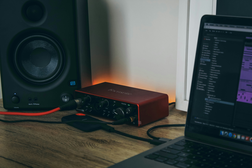
A laptop, a pair of headphones, and a DAW. A MIDI controller helps but isn't essential. You don't need an audio interface unless you're recording vocals or live instruments. A browser-based DAW removes the software install and compatibility issues that stop many beginners before they start. You can begin with under $100 in equipment if you already have a laptop.
Yes, though differentiation matters more than it did five years ago. Producers who find a specific niche — a genre subculture, a distinctive sonic identity — outperform generalists. The market is saturated with average beats; it's hungry for distinctive ones. Earnings range from $100–300/month for casual sellers to $3,000+/month for producers with brand recognition.
Most producers who treat this seriously see their first $100 month within three to six months. Reaching $500–1,000/month typically takes 12–24 months. Full-time income is usually a three-to-five-year build from zero. The timeline compresses with prior audience or social media presence.
Start creating beats and songs in minutes. No experience needed — it's that easy.
Get started